
Charting the Informational Universe
September 16-18, 2025
Cleveland, OH
SPEAKERS
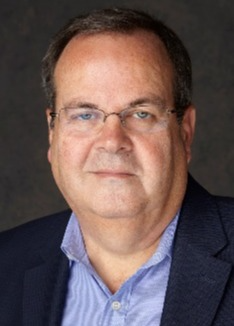
Kevin Gamache
Chief Research Security Officer and Director, NSF SECURE Analytics
Texas A&M
Dr. Kevin Gamache is Chief Research Security Officer for The Texas A&M University System responsible for ensuring the 11 universities and 7 state agencies within the A&M System are compliant with U.S. Government requirements for protecting sensitive federal information. He also serves as the Facility Security Officer for The Texas A&M University System and manages the System’s security relationships with the Department of Defense and the Department of Energy. Dr. Gamache has earned the Industrial Security Professional® designation.
Prior to his current position, Dr. Gamache was Executive Programs Training Manager for Texas Engineering Extension Service’s National Emergency Response and Rescue Training Center (or NERRTC). NERRTC, a member of the National Domestic Preparedness Consortium (NDPC), was established to train local and state officials and emergency responders to prepare for and respond to acts of terrorism including those involving the use of weapons of mass destruction (WMD) as well as natural disasters and catastrophic incidents.
He joined NERRTC in 2005 after serving twenty-four years in the United States Air Force. His military career included a wide range of command, nuclear operations, maintenance, logistics, and counter proliferation assignments in Wyoming, Montana, Texas, and Washington D.C. His final Air Force assignment was as the 341st Maintenance Group Commander at Malmstrom AFB in Montana where he retired with the rank of Colonel.
Sessions
1:10 pm - 1:55 pm
Research security compliance is an essential and challenging process for university research administrators. Many countries, including the United States, have instituted research security policies tied to government research grants, with the goal of safeguarding research from undue foreign influence. In this panel, we will discuss how Research Information Management Systems (RIMS) can support these efforts. Any research security work is only as good as the data behind it. RIMS offer one important source of research security data about faculty affiliations (current and prior), funding sources, and collaborators. We will hear how universities are using their RIM to support this use case.


Sponsors and Exhibitors
Founder and Organizing Sponsor

Gold Sponsor

Gold Sponsor

Gold Sponsor

Silver Sponsor

Silver Sponsor

Silver Sponsor


Virtual Event